
About Me
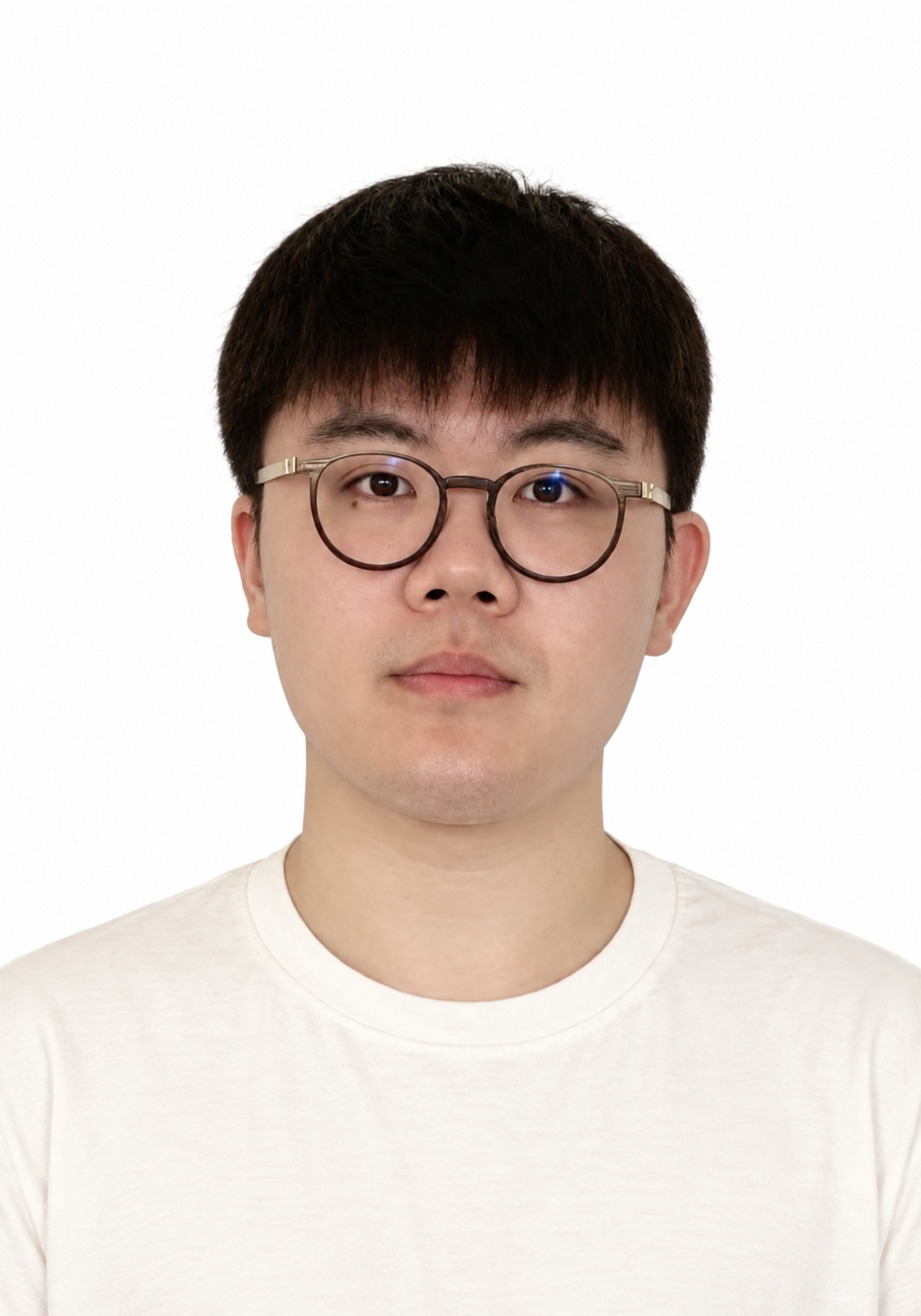
Hi! I am Wenbo Wei (魏文博). I received my PhD in Computer Science from the University of Warwick, UK, supervised by Prof. Abhir Bhalerao and Dr. Shan Raza. My research focuses on visual representation learning, particularly occlusion-aware panoptic segmentation, to improve scene understanding under occlusion.
News
Education

University of Warwick
PhD in Computer Science, School of Computer Science
Coventry, United Kingdom
Research: occlusion-aware panoptic segmentation
01/2021 – 06/2026

University of Birmingham
MSc in Advanced Computer Science, School of Computer Science
Birmingham, United Kingdom
09/2019 – 09/2020

Chongqing University of Posts and Telecommunications
BSc in Internet of Things Engineering, School of Automation
Chongqing, China
09/2013 – 09/2017
Publications
-
IEEE International Conference on Multimedia and Expo (ICME), 2026
-
IEEE International Conference on Acoustics, Speech and Signal Processing (ICASSP), 2025
-
Occlusion-Aware Panoptic SegmentationPhD Thesis, University of Warwick, 2026
-
Computer Science On-line Conference (CSOC), 2020
Experience
Teaching Assistant
Department of Computer Science, University of Warwick
· Image and Video Analysis: Image segmentation, optical flow estimation, and object tracking.
· Machine Learning: Representation learning, dimensionality reduction, and clustering.
· Neural Computing: Implementation of neural networks from scratch, backpropagation, and optimisation.
09/2021 – 12/2024
Research Intern – Intelligent Vehicle Lab
Chongqing University of Posts and Telecommunications
Developed an embedded vision system for vehicle and pedestrian detection in campus traffic monitoring. Compiled Darknet with CUDA support on NVIDIA Jetson TK1, deployed YOLO, and integrated GPU inference with camera input, achieving 4.2 FPS on-device processing.
06/2015 – 08/2016
Projects
PEMOLA: Occlusion-Aware Position Encoding for Panoptic Segmentation
PhD Research
Developed a lightweight, plug-and-play module that incorporates image-dependent occlusion cues into position encoding for transformer-based panoptic segmentation. Spatial attention extracted from an occlusion classifier using Grad-CAM is combined with learnable occlusion-level embeddings to modulate position encodings along spatial and channel dimensions through residual gating.
Built Mask2Former variants with frozen SAM 3 and DINOv3 encoders to evaluate PEMOLA across backbones. With only 0.01 GFLOPs of additional computation, PEMOLA improved instance, semantic, and panoptic segmentation across COCO-OLAC and Cityscapes-OLAC.
Paper · Code · Model weights
Occlusion Benchmarks and Supervised Representation Learning
PhD Research
Established a manual annotation protocol using visible instance masks and estimated hidden extent to assign three image-level occlusion classes. Constructed COCO-OLAC (30,000 train / 5,000 val) and Cityscapes-OLAC (2,975 train / 500 val), and benchmarked panoptic segmentation methods including Mask2Former and Mask DINO.
Developed occlusion-supervised contrastive training with positive/negative feature pairing and margin constraints alongside segmentation losses, producing clearer object boundaries and better separation of adjacent instances. Designed a curriculum based on occlusion severity that used 60% fewer training updates for comparable validation performance.
Paper · Code · COCO-OLAC annotations · Cityscapes-OLAC annotations
Skills & Languages
Coding tools: Codex
Languages: Mandarin (native), English (professional working proficiency)